
There is a subtle but meaningful distinction between reacting and responding. On the surface,
they can appear nearly identical—both are forms of action, both arise in response to something
outside of us—but the internal state from which they emerge is entirely different.
To react is to move quickly, often unconsciously. It is an action shaped by emotion before the
present moment has fully revealed itself. In many cases, a reaction is not truly about what is
happening now. Instead, it is guided by something older—an unresolved experience that the
body recognizes as familiar, and therefore potentially unsafe.
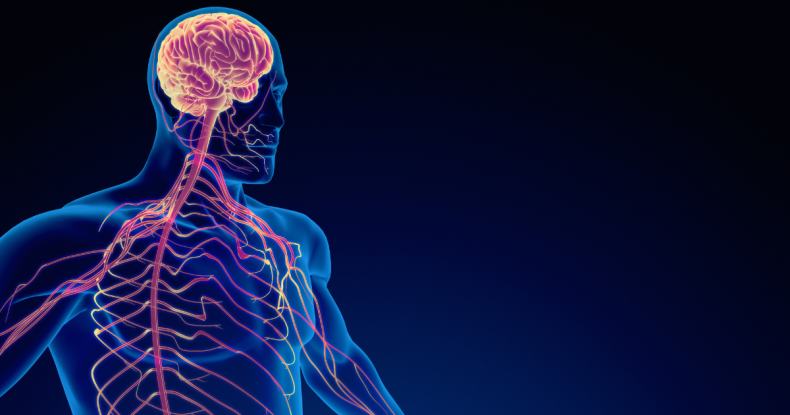
The human nervous system is designed for survival. It is constantly scanning the environment for
cues of safety or threat. When something in the present resembles a past experience that carried
stress or discomfort, the body does not pause to analyze the nuance. It recognizes a pattern and
moves into action.
This is where reaction begins.
From a physiological perspective, this process is driven by the sympathetic nervous system—the
branch responsible for mobilization, often referred to as the “fight or flight” response. Heart rate
increases, breath becomes shallow, and the body prepares to act. This response is intelligent and
necessary in moments of true danger.
However, in modern life, many of the triggers we encounter are not life-threatening. A
conversation, a misunderstanding, or a moment of uncertainty can activate the same
physiological cascade if it resonates with something unresolved from the past.
When this happens, we are not simply reacting to the present—we are reacting through the lens
of memory.
A response, by contrast, arises from a different internal environment.
It emerges when the nervous system is more regulated, when the body is not operating from a
constant state of vigilance. This is the domain of the parasympathetic nervous system—the
aspect of our physiology associated with rest, repair, and restoration. In this state, breath
deepens, perception expands, and the body becomes receptive rather than defensive.
From here, there is space.
And within that space, there is choice.
A response does not ignore emotion, but it is not driven solely by it. It allows emotion and
awareness to work together. It takes into account what is actually happening, rather than what
has already happened. It is shaped by presence, not just pattern.
The ability to respond instead of react is often thought of as a mental or emotional skill. But in
practice, it is just as much a physiological one. Many individuals find themselves aware of their
patterns, yet still caught in them. This is not a lack of understanding—it is a reflection of how
deeply these responses are held within the body.
True change requires nervous system regulation.
Within the framework of Kototama Inochi Medicine, health is understood as a harmonious
expression of life’s underlying patterns—vibrational, physical, and energetic. When the system is
in balance, there is fluidity in how we experience and respond to the world. When it is not, we
begin to see rigidity—repetitive reactions, persistent tension, and a diminished capacity to adapt.
Chronic activation of the sympathetic nervous system plays a central role in this imbalance. Over
time, the body can remain in a low-level state of stress, even in the absence of immediate threat.
This leads to the accumulation of unprocessed stress hormones and a nervous system that
becomes increasingly reactive.
This is where acupuncture can play a meaningful role in supporting both physical and emotional
health.
Through regular acupuncture treatment, the body is gently guided toward a more regulated state.
One of the most consistent benefits observed in clinical practice is a shift in the baseline of the
central nervous system. The body becomes more familiar with the parasympathetic state—not as
something temporary, but as something sustainable.
At 7 Stones Acupuncture, this shift is often where deeper healing begins.
As the nervous system regulates, the body gains the capacity to process what has previously been
held. Stress hormones that were mobilized but not fully discharged can begin to move through
the system. Muscular tension softens. Breath becomes more natural. The system begins to update
its understanding of what is safe.
This process is not forced—it unfolds.
And as it does, the patterns that once drove automatic reactions begin to change.
Situations that previously felt overwhelming may no longer carry the same intensity. The body
does not respond as quickly or as strongly. There is a growing sense of space between stimulus
and action. In that space, a different kind of choice becomes available.
This is the shift from reacting to responding—not as an abstract concept, but as a lived
experience supported by a more balanced nervous system.
Awareness remains an important part of this process. The ability to notice internal
signals—changes in breath, tension in the body, emotional surges—creates the opportunity to
pause. But when this awareness is supported by a regulated physiology, the pause becomes more
accessible, more natural.
For those looking to cultivate this shift in their daily lives, a few simple practices can be helpful:
- Notice the Body’s Signals
Pay attention to the early signs of activation. These may include shallow breathing, increased
heart rate, or a sense of urgency. These signals often precede reactive behavior. - Create a Small Pause
Even one or two slow, conscious breaths can begin to shift the nervous system out of a reactive
state. - Broaden Awareness
Gently take in more of the present moment. What is actually happening, beyond the initial
trigger? - Allow Emotion to Be Present
A response is not the absence of feeling. It is the ability to include emotion without being
overtaken by it. - Support the System Consistently
Practices such as acupuncture, mindful breathing, and restorative movement can help establish a more regulated baseline over time.
The movement from reaction to response is not about suppressing instinct or becoming detached.
It is about restoring balance—within the body, the nervous system, and the way we engage with
the world around us.
It is also a return to something more natural.
When the body is no longer held in a constant state of vigilance, the present moment becomes
clearer. We are no longer filtering every experience through the lens of the past. Instead, we are
able to meet what is in front of us with greater accuracy, greater awareness, and greater ease.
From this place, our actions begin to change.
Not because we are forcing them to, but because the system from which they arise has shifted.
And within that shift, something important becomes available again:
The ability to choose—grounded not in reaction, but in a more integrated, responsive
relationship with the present moment.
