
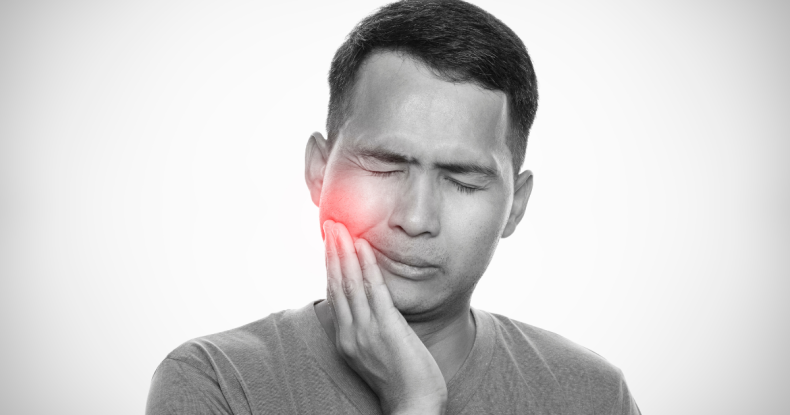
If you grind or clench your teeth, there is a good chance your dentist has already recommended a
night guard. And that recommendation is a sound one. Protecting your teeth from the forces of
grinding and clenching is genuinely important, and the cost of not doing so can be significant. I
know this firsthand. Between years of acid reflux and my own jaw clenching, I have spent tens
of thousands of dollars on my teeth. A night guard is a reasonable investment.
But here is what I have come to understand, both as a practitioner and as someone who lives with
this personally.
A night guard protects your teeth from the problem. It does not address the problem itself.
What Is Actually Happening
Bruxism, the clinical term for grinding and clenching, is rarely just a dental issue. In most of the
patients I treat for it, there is a stress component underneath. The jaw becomes the place where
the body holds what the mind cannot fully put down.
This makes a certain kind of sense when you understand what is happening in the nervous
system. When the sympathetic nervous system is activated, the body prepares for threat. Muscles
tighten. The jaw is one of the places that tension lands most reliably. And for many people,
especially those carrying unresolved stress or lingering stressors from the past, the sympathetic
nervous system never fully disengages. It stays quietly activated, and the jaw stays quietly
clenched, even during sleep.
The night guard catches the consequence of that. Acupuncture works on the cause.
What Treatment Actually Looks Like
When a patient comes in for jaw clenching or bruxism, treatment addresses two things
simultaneously.
The first is the jaw itself. Specific acupuncture points along the jaw line are needled directly to
help the muscles release. This is often one of the most immediately noticeable effects of
treatment. Patients frequently describe feeling a looseness in the jaw that they haven’t
experienced in a very long time, sometimes years. It is the physical sensation of something
finally letting go.
As treatment progresses, patients typically begin reporting less clicking in the joint, less locking,
and a gradual reduction in the grinding and clenching itself. These changes don’t always happen
overnight, but they are consistent and they build over time.
The second focus is the nervous system. This is where the deeper work happens. By helping the
body shift out of sympathetic dominance and into a more regulated parasympathetic state,
treatment addresses the underlying pattern that keeps the jaw clenched in the first place. The goal
is not just a jaw that stops grinding. It is a nervous system that remembers how to fully
disengage.
The Unresolved Stressor
Something I see consistently in bruxism patients is that the stress driving the clenching is often
not only current stress. It is frequently something older, something that has not been fully
processed, that keeps the nervous system at a low level of activation even when life
circumstances would otherwise allow for rest.
The body holds what the mind hasn’t finished with yet. And the jaw, for many people, is where
that holding happens most visibly.
Acupuncture does not require you to have resolved those stressors consciously before it can help.
The treatment works at the level of the nervous system directly, helping the body release patterns
of tension that have become habitual regardless of their origin. Often, as the physical holding
releases, the emotional processing that follows becomes easier as well.
A Personal Note
I want to be transparent about something. This is an issue I live with myself.
My own jaw clenching is directly tied to my stress levels, and I can predict with reasonable
accuracy when it will be worse and when it will ease. I struggle with wearing my night guard
consistently, and I will be honest that there are times I choose not to wear it.
What I can tell you from personal experience is that the connection between stress, nervous
system activation, and jaw clenching is not theoretical. It is something I feel directly in my own
body. And it is something that acupuncture addresses in a way that simply wearing a guard at
night does not.
I am not here to tell anyone to abandon their night guard. That is a conversation for your dentist,
and protecting your teeth is genuinely important. What I am saying is that if you have been
wearing one for years and still waking up with a sore jaw, a tight face, headaches, or a clicking joint, the guard may not be the whole answer. There may be more available to you than you have
been offered.
What to Expect
Most patients notice meaningful improvement in jaw tension within the first several treatments.
The changes tend to build progressively as the nervous system settles into a new baseline. Stress
will always be part of life, and for some people jaw clenching may always require some degree
of ongoing management. But the difference between a nervous system that is chronically stuck in
activation and one that can actually return to rest is significant, and most patients feel that
difference clearly over the course of treatment.
If you have been managing jaw clenching or bruxism with a night guard alone and wondering
whether there is something more that can be done, the answer is yes.
7 Stones Acupuncture & Wellness serves patients throughout Sheboygan County and Southeast
Wisconsin. To schedule an appointment or ask a question, call or text (262) 622-3602 or visit
7stonesacupuncture.com.
