
The Long Road Back and Why It’s Worth Taking
There is an injury that leaves no visible mark.
No cast. No scar. No bandage that signals to the world that something serious happened and that healing is underway and that patience and care are needed. Traumatic brain injury lives entirely inside the skull, invisible to everyone including, sometimes, the person carrying it — who may find themselves dismissed, misunderstood, or simply expected to recover on a timeline that has nothing to do with how the brain actually heals.
The brain is not a broken bone. It does not follow a twelve-week recovery arc. And the absence of a visible injury does not make the recovery any less real, any less demanding, or any less deserving of support.
This post is for anyone living with the aftermath of a TBI — whether recent or years old — and wondering what else might be possible beyond what conventional medicine has offered.
What TBI Actually Does to the System
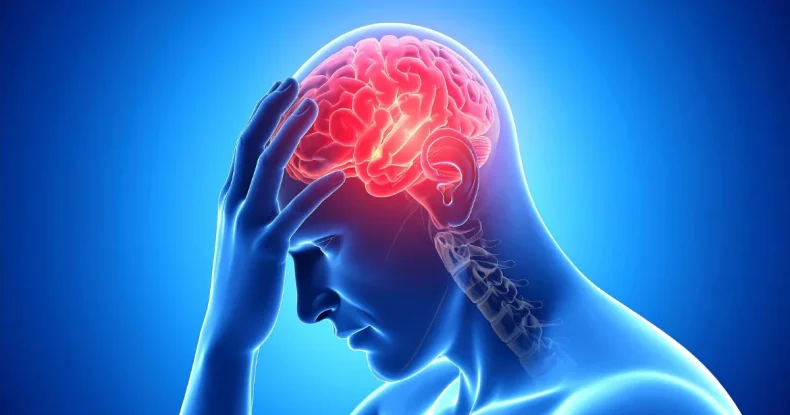
A traumatic brain injury occurs when an external physical force impacts the brain — through a fall, a collision, a blast, or any number of other mechanisms. The immediate damage is only part of the picture. What follows is a cascade of neurological and physiological responses that can persist for months or years: cognitive dysfunction, difficulty with memory and concentration, emotional dysregulation, chronic pain, sleep disruption, fatigue, and a nervous system that seems permanently stuck in a state of high alert.
That last element — the nervous system locked in chronic activation — is one of the most significant and least discussed consequences of TBI. The brain, having experienced a significant threat, keeps the body’s protective systems engaged long after the acute injury has passed. The result is a system that cannot fully rest, cannot fully regulate, and cannot fully heal because it is perpetually spending its resources on protection rather than recovery.
This is where acupuncture has something genuinely meaningful to offer.
What the Research Shows
The evidence base for acupuncture in TBI recovery has grown substantially in recent years.
A 2023 multi-institutional cohort study examining 2,163 TBI patients found that those who received acupuncture had more than twice the chance of achieving significant improvement in consciousness recovery compared to those who did not, with acupuncture users showing a 2.11 times higher likelihood of meaningful progress even when accounting for all other clinical variables.
A 2024 review published in Frontiers in Cellular Neuroscience found that TBI patients who received acupuncture experienced a lower risk of dementia, stroke, and consciousness disorders, along with fewer emergency and hospital visits compared to those who did not receive acupuncture. The same review noted that a meta-analysis of randomized controlled trials demonstrated acupuncture’s effectiveness in alleviating cognitive and neurological symptoms following TBI.
Researchers have proposed that acupuncture’s benefits in TBI may operate through several biological mechanisms including effects on glial cells, autophagy, and apoptosis — suggesting that the impact goes well beyond symptom management into the actual neurological recovery process.
These findings are consistent with what practitioners who work with TBI patients observe clinically: that acupuncture supports the conditions under which the brain can do its own healing work more effectively.
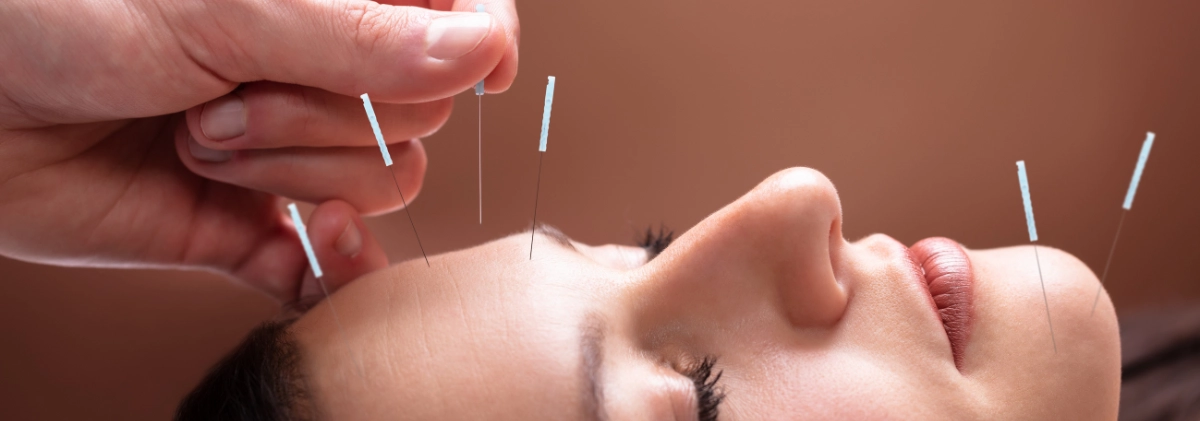
Woman receiving acupuncture relief at 7 Stones
(Sources: Lin et al., Healthcare, August 2023, doi:10.3390/healthcare11162267; Wu et al., Frontiers in Cellular Neuroscience, August 2024, pmc.ncbi.nlm.nih.gov/articles/PMC11335542/)
What Acupuncture Actually Does in TBI Recovery
The most consistent and significant contribution acupuncture makes in TBI recovery is one that runs through everything else: it helps bring the nervous system out of fight-or-flight and into a state of parasympathetic regulation.
For a TBI patient, this is not a small thing. Keeping the CNS regulated and in a state of rest is one of the central challenges of TBI recovery. The brain cannot heal efficiently while it is perpetually in a state of protection. Every hour the nervous system spends in true rest is an hour the brain can dedicate to the work of restoration rather than survival.
In Kototama Inochi Medicine, treatment is guided by the pulses, which reflect the state of the body’s systems in real time. In TBI patients, the pulse picture tends to show significant imbalance across multiple organ systems — a reflection of how broadly the injury has disrupted the body’s regulatory capacity. As treatment progresses week by week, the pulses begin to reflect a system that is finding its way back toward balance more consistently. Setbacks still occur — they always do in TBI recovery — but over time they become less impactful. The disruption is smaller. The return to regulation is faster.
Progress in TBI recovery is measured in small increments. From one week to the next, a patient might regain only a few minutes of increased regulation. A slightly longer window of mental clarity. A night of marginally better sleep. These returns feel small in the moment. Over months they accumulate into something meaningful.
The Invisible Cast
One of the most difficult aspects of TBI recovery is something that has nothing to do with the injury itself.
We are accustomed to visible injuries. A broken bone comes with a cast that signals clearly to everyone — to the injured person, to their family, to their employer, to their social world — that something serious happened, that healing takes time, and that patience is appropriate. The cast is also a signal to the person themselves. It is permission to heal.
TBI has no cast. The injury is invisible. And in a society that struggles to extend empathy to what it cannot see, TBI patients often find themselves expected to function normally, to push through, to recover on a timeline that reflects other people’s comfort rather than the brain’s actual needs.
The brain takes considerably longer than twelve weeks to heal from a significant injury. There is no shortcut and no visible milestone that marks the progress. What there is, for the patient willing to commit to the long road, is a gradual and accumulating improvement that eventually becomes undeniable — even if no single week felt like enough.
What to Realistically Expect
I want to be straightforward about what acupuncture offers in TBI recovery, because honesty matters more here than enthusiasm.
This is not a fast process. Weekly treatments over several months are typically the minimum meaningful commitment for someone navigating TBI recovery. The early weeks may feel like the returns are too small to justify the effort. They are not. Those small returns are the foundation that everything else is built on.
My clinical experience with TBI is more limited than my experience with many other conditions — it is not a condition I see in large numbers in my practice. What I can offer is a system of medicine that is extraordinarily well suited to the core challenge of TBI recovery: helping the nervous system find and hold a state of regulation so the brain can do what it already knows how to do, given the right conditions.
The research supports this. The clinical logic supports this. And for the right patient, willing to commit to the pace the brain actually requires, the results are real.
