
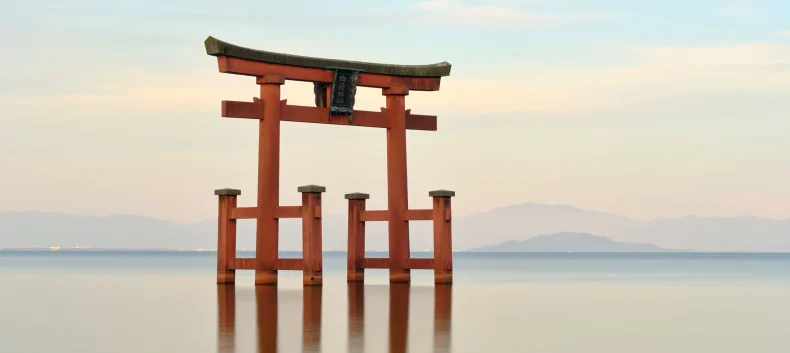
There is a form of medicine practiced in the United States by a small and dedicated group of licensed acupuncturists that almost no one outside of those practitioners and their patients has ever encountered.
It is not new. Its roots reach back through centuries of Japanese healing tradition, Shinto philosophy, and an ancient principle called Kototama — the understanding that out of sound and vibration came all of existence, and that as beings capable of creating frequency, we carry a quiet but profound responsibility for how we use that capacity.
It is not obscure because it lacks results. The people who find their way to it tend to speak about it with a kind of wonder that is difficult to explain until you have experienced it yourself.
My name is Scott Bartell. I am a licensed acupuncturist and the owner of 7 Stones Acupuncture and Wellness in Cascade, Wisconsin. Kototama Inochi Medicine is the foundation of everything I do in the treatment room. This post is my attempt to share what it is, where it came from, and why it continues to reveal something new to me every single day.
Where It Came From
Kototama Inochi Medicine was developed by Masahilo Nakazono, known within the tradition as Osensei. Through decades of study in Aikido, natural medicine, Shinto principles, and the ancient Kototama principle, Nakazono created a form of medicine unlike anything that had existed before — one that integrated the wisdom of Japanese acupuncture and bodywork with the living philosophy of Kototama. He established the Kototama Institute in Santa Fe, New Mexico, where the medicine was formally taught.
The lineage from Nakazono runs through Dr. Thomas Duckworth, who spent over a decade in direct study with Nakazono Osensei and contributed substantially to the development and preservation of the practice. Dr. Duckworth then taught Dr. Ted Hall, who studied at the Kototama Institute and continued in direct work with Dr. Duckworth over many years. Dr. Hall taught me during my time at Southwest Acupuncture College in Boulder, Colorado.
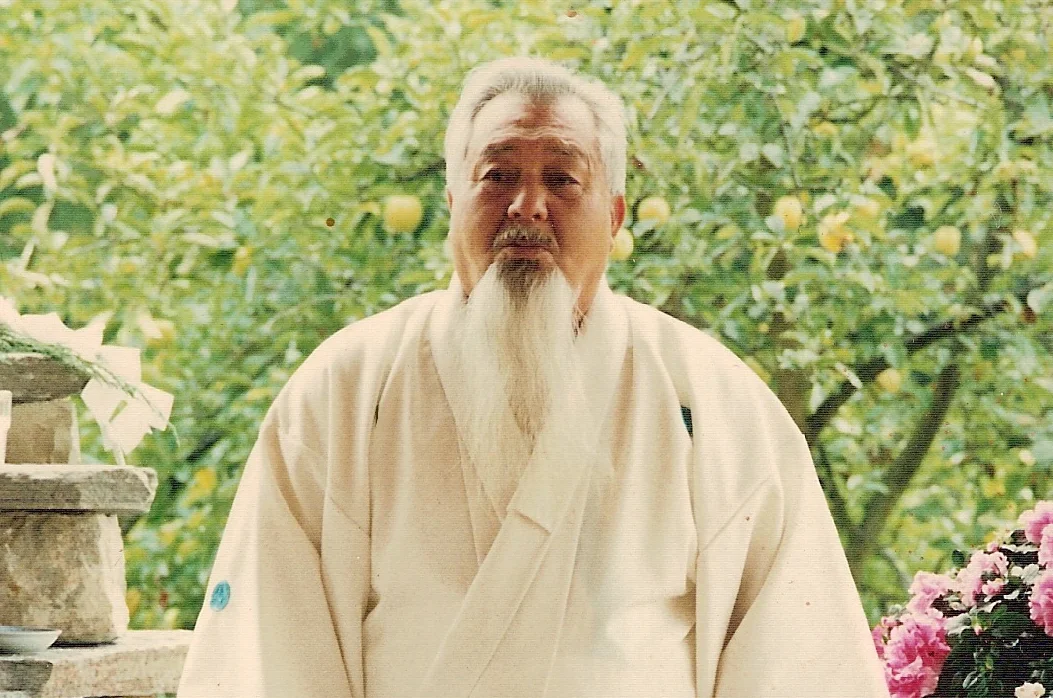
Nakazono to Duckworth to Hall to Bartell.
That lineage is not a credential to display. It is a living thread of transmission, and I carry it with deep gratitude and reverence for everyone who came before me in that chain.
What Kototama Actually Is
The word Kototama refers to the ancient Japanese and Shinto principle of life sounds. At its heart, it is about listening — on many levels simultaneously, mind, body, and spirit. It is about seeking balance in thoughts, actions, and surroundings. And it holds the awareness that the frequencies and sounds we create ripple outward into our communities and our world in ways we are responsible for, whether we acknowledge that responsibility or not.
To me, Kototama is a living adventure of discovery. The medicine has taught me as much as I have studied it. Each year of practice reveals something I could not have seen the year before — not because the path is grueling but because perspective deepens naturally when you commit to listening. Life itself becomes the teacher, and the lessons show up in the treatment room, in relationships, in the quiet moments between.
When I am working with a patient, the Kototama principle is present in how I listen before I act. It is present in the restraint of my own will in favor of what the body is actually asking for. It is present in the understanding that my role is not to impose a correction but to hear what needs to happen and create the conditions for it.
How the Medicine Actually Works
When I explain this medicine to new patients I describe it as being rooted in a very old Japanese lineage that makes suggestions to the body rather than demands of it.
Most people arrive expecting something to be done to them. What happens instead is more like a conversation — between the practitioner and the body’s own intelligence, conducted through the pulses.
Pulse diagnosis in this tradition is not a preliminary step. It is the ongoing, continuous language of the treatment itself. Early in my practice I took pulses a couple of times per session. Now, having learned to be a better listener over a decade of practice, I take them numerous times throughout every treatment. Each reading tells me what is shifting, what the body is asking for next, and what it is not yet ready to receive.
This removes my will from the center of the treatment. I am not deciding what I think should happen and executing a plan. I am listening to what the body is reporting and responding accordingly. The body is always the authority in the room.
One of the tenets of our practice is this: there is only room for one person in the treatment room, and that is the patient. My ego has no place there. I am still in charge of what happens, but my ego is not making the decisions.
It is worth noting, as life has taught me more than once, that it is simply not nice to should on yourself or anyone else. This medicine was built around that understanding.
What This Means for the Patient
In practice, this philosophy produces something patients often describe as unlike anything they have experienced in any other clinical setting.
They feel heard before they feel treated. The treatments are gentle. The needle work is light and shallow. The approach is patient and unhurried. And the results, because they are built on what the body is actually asking for rather than what a practitioner has decided it needs, tend to be lasting in a way that symptom management alone never quite achieves.
About 85% of every treatment is oriented toward helping the body restore its own foundational balance, its capacity to self-regulate, self-correct, and heal from within. The remaining 15% addresses the specific complaint that brought the patient in. Not because symptoms don’t matter, but because a system in true balance produces far fewer of them over time.
The Responsibility of Carrying Something Rare
I often feel this medicine chose me as much as I chose it. And I think often about the fact that there are not more of us doing this work, because it has so much to offer.
What I have come to understand is that the responsibility of carrying a living lineage is ultimately a responsibility to community. We are each our own number one to manage, but unless we choose the life of a solitary monk, we are also part of something larger. The more we develop ourselves in genuine service of those around us, the stronger we all become.
When one person finds their way back to balance, when the body remembers how to flow, that person shows up differently in every relationship and every interaction. Health does not stay contained within the individual. It ripples outward.
This is what I am building at 7 Stones. Not just a practice. A center. A place where this medicine takes root in the Midwest and grows in a way that serves the community for generations beyond my own tenure in the treatment room.
That is the long game. And it is the only one worth playing.
If You Are Curious
You do not need to understand the philosophy before your first treatment. You do not need to have read Nakazono or studied pulse theory or know anything at all about Japanese medicine.
You simply need to be willing to show up and tell me your story.
The medicine will do the rest.
7 Stones Acupuncture & Wellness serves patients throughout Sheboygan County and Southeast Wisconsin. Scott Bartell is a licensed acupuncturist trained in Kototama Inochi Medicine through the lineage of Nakazono Osensei, Dr. Thomas Duckworth, and Dr. Ted Hall. To schedule an appointment or learn more, call or text (262) 622-3602 or visit 7stonesacupuncture.com.
Sources: kototamamedicine.com, Ted Hall L.Ac.; iaalm.org, International Academy of Kototama Inochi Lineage Medicine; Duckworth, T., “Pulse Diagnosis,” IAALM Blog.

[…] Kototama Inochi Medicine, the spleen system governs digestion and the transformation of food into usable energy. When it is […]