
Here’s What Your First Visit Actually Feels Like
There’s a particular kind of courage it takes to walk through the door of an acupuncture clinic for
the first time.
Most people arrive carrying a quiet mixture of curiosity, hope, skepticism, and something that
resembles nervous energy. They’ve usually tried other things. They’ve been managing,
compensating, waiting to see if it gets better on its own. And at some point they decided, maybe
reluctantly, to try something different.
That decision matters. And it doesn’t go unnoticed.
The first thing I want you to know
When you sit down across from me for the first time, I’m not going to hand you a form or fire
questions at you from behind a desk.
I’m going to set down my pen, turn my chair to face you, and ask you one thing:
“Tell me your story.”
Because before I need to understand your condition, I need to understand you. You are not a
diagnosis. You are not a symptom list. You are a person who has been living inside a particular
experience, and that experience deserves to be heard before anything else happens.
What you’re doing in that moment is something quietly brave. You’re placing yourself in a
position of vulnerability with someone you’ve only just met. That trust is something I take
seriously every single time.
“Does it hurt?”
This is almost always the first real question, and it’s a fair one.
The honest answer is that when acupuncture is performed by a well-trained practitioner, the vast
majority of patients feel very little. In my clinic, well over 90% of needles are not felt at all. The
ones that are felt tend to register as a brief, faint sensation something like a tiny mosquito bite
that disappears almost before you’ve finished noticing it.
Most first-time patients are genuinely surprised. Not because they were misled about what to
expect, but because what they imagined and what they actually experience are worlds apart.
What actually happens during your first visit?
After we talk, and we will take the time to actually talk, treatment begins.
Depending on what’s brought you in, we may explore your sleep, your stress, your history, your
habits, the patterns you’ve noticed and the ones you haven’t. Healing is rarely just one thing. It’s
almost always a combination of factors that have accumulated quietly over time, and part of my
job is helping you begin to see those patterns clearly.
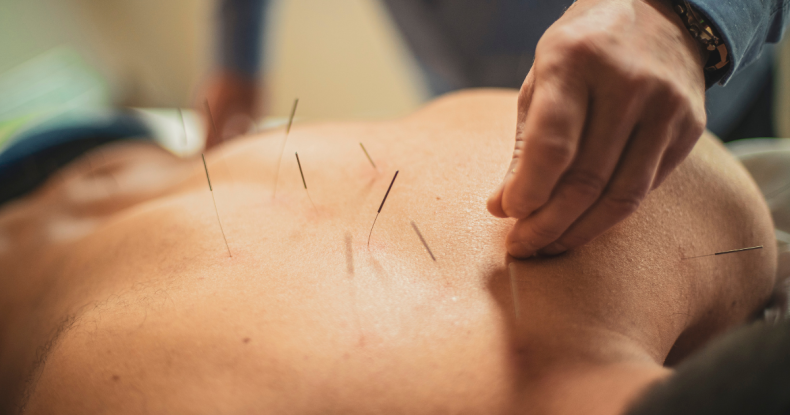
Then you lie down. The needles go in, most of which you won’t feel. And then something
interesting happens.
The body softens. Tension you didn’t even realize you were holding begins to release. Shoulders
drop. Breathing slows. The nervous system, often wound tight for months or years, begins to
remember what it feels like to let go.
Some patients drift into a sleep so deep I’ve heard it described affectionately as snoring like a
drunken sailor.
In those moments, I feel genuine gratitude. Because that surrender that ability to finally let go is
not a small thing. It is, in many ways, the first real step toward healing.
What will you feel afterward?
The effects of acupuncture don’t stop when you leave the table. The body continues to regulate
and integrate the treatment, often over the following 48 to 72 hours.
Sometimes the changes are dramatic. More often, at first, they’re subtle sleeping more deeply,
reacting less sharply, feeling a quietness underneath the noise of the day. A sense, as one patient
described it, of your body finally exhaling.
Those subtle shifts are not small. They are the foundation that larger changes are built on.
How many treatments will you need?
The honest answer is: it depends.
Someone treating an issue that started three weeks ago is in a very different place than someone
who has been managing the same pattern for fifteen years. Those situations require different
levels of support, and I’ll always be straight with you about what I’m seeing.
As a starting point, I typically recommend once a week for five weeks, then we reassess together.
The goal in that early period is to get ahead of the momentum the body has built around its
patterns to create enough consistency that the system begins shifting in a meaningful, lasting
way.
Some people need two or three treatments. Others benefit from longer support. There’s no single
answer, and I won’t pretend otherwise.
A different philosophy
The foundation of my practice is Kototama Inochi Medicine a Japanese style of acupuncture
built around a simple but profound idea: the body already knows how to heal itself.
My job is not to force a correction. It’s to invite the body to remember its own capacity to
regulate, balance, and restore. About 85% of what I do in any given treatment is oriented toward
that deeper restoration. The remaining 15% addresses the specific symptom that brought you in
because you should leave feeling better than when you arrived.
This is what makes acupuncture, practiced this way, different from simply managing symptoms.
We’re not chasing the problem. We’re helping the system that created it begin to function
differently.
You don’t need to have it all figured out
You don’t need prior experience with acupuncture, a deep understanding of Eastern medicine, or
perfect clarity about what’s wrong. You don’t need to be ready with the right words or the right
answers.
You just need to be willing to show up and tell me your story.
That’s always enough.
7 Stones Acupuncture & Wellness serves patients throughout Sheboygan County and Southeast
Wisconsin. To schedule your first appointment or ask a question, call or text (262) 622-3602 or
visit 7stonesacupuncture.com.
